
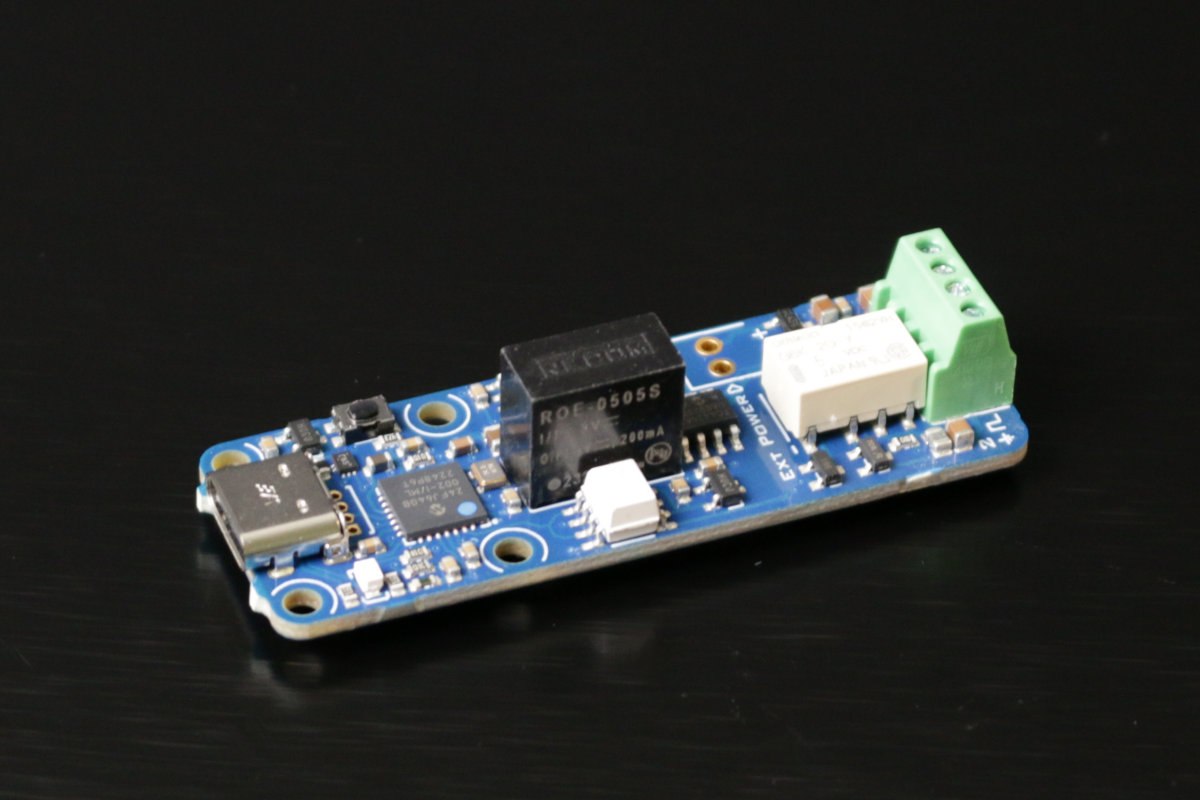
Product description
POC-PWM-Tx-C: PWM output with variable frequency and duty cycle. For LEDs, control inputs, and simulated signals. Usable as a driverless USB device from a PC, embedded Linux such as Raspberry Pi, or a network configuration via POC-Hub. Easy to integrate into prototype evaluation, inspection jigs, equipment monitoring, and data acquisition systems.
Specifications / software
- Specifications
- 2-channel PWM output. Generates control signals with variable frequency and duty cycle.
- Software specifications
- Implement current value retrieval, units, calibration, data logging (supported models), and alarms / periodic acquisition with the Positive ONE Sensor API. Remote collection via VirtualHub/POC-Hub is possible.
- Options
- Options: terminal block / cable, BNC version or coaxial cable (low-level signals), POC-Hub, case, and verification of calibration conditions.
- Comparison with similar products
- PWM series: PWM output generation. To measure existing PWM signals, use POC-PWM-Rx-C.
- Applications and selection points
- PWM output with variable frequency and duty cycle. For LEDs, control inputs, and simulated signals.
Network collection via the dedicated API / virtual hub / POC-Hub is also supported. For setup steps and how to choose a connection mode, see the Development guide.
Distribution
This product is a driverless USB measurement module distributed by Positive ONE. We provide supply, technical support, and contract development in Japan. It runs on Windows / Linux (Intel, ARM) / macOS / Android, and can also be used with embedded Linux such as Raspberry Pi or in network configurations via POC-Hub.